본 글은 Ublox lea-m8f가 oscillator를 어떻게 동기화 하며, 그 구성도에 대해 정리하였다. 3가지 형태로 정리하였다.
Ublox lea-m8f는 ublox사의 GPSDO 제품으로 내부에 30.72MHHz VCTCXO(internal osc)를 가지고 있다. GNSS 신호를 수신하면 GNSS 신호를 source로 하여, 내부 VCTCXO를 GNSS 신호에 맞추어 Time sync, Freq sync를 맞추는 기능을 제공한다. 또한 lea-m8f 외부에 주파수원(osc)를 연결하면 2가지 기능을 수행할 수 있다. 이것을 설명하기에 앞서 용어정리를 한다.
osc : Oscillator
internal osc : lea-m8f 내부 30.72MHz VCTCXO
external osc : lea-m8f와 연결되는 외부 osc
source osc, disciplining osc : 기준이 되는 주파수 원
disciplined osc : source osc를 따르는 osc. source가 disciplined osc를 길들인다.
lea-m8f가 disciplining을 수행한다 : disciplined osc 주파수와 time을 source osc 주파수, time에 맞춘다는 의미
※ 다음은 LEA-M8F Receiver description - Manual에서 주요 용어에 대해 정의한 내용이다.
• Disciplined oscillator: an oscillator whose frequency is corrected by a more stable frequency reference, such as a GNSS system.
• Internal oscillator: the mandatory disciplined oscillator which is used as the reference frequency for the GNSS receiver subsystem. The output from this oscillator is also available to the application as an output from the module.
• External oscillator: an optional oscillator, disciplined by the receiver, either via I2C DAC or via UBX messages handle by a host.
• Source: a source of frequency and/or phase synchronization either measured by the receiver based on direct hardware input or an offset estimated by an external timing sub-system with respect to the receiver output. Sources are handled according to related estimates of uncertainty delivered by the application or (for oscillators) configurable models provided by the receiver
1.
다음 그림은 GNSS 신호가 source이고 VCTCXO가 disciplined osc인 경우이다.
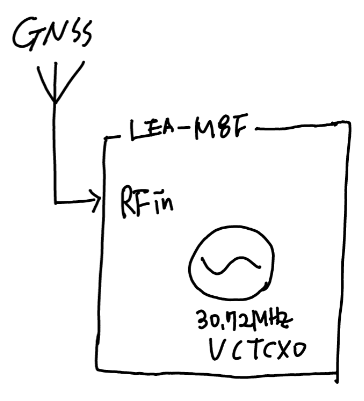
이 상황은 GNSS 신호로 내부 VCTCXO(int.osc)를 disciplining 하는 것이다. GNSS신호로 int.osc 를 길들이는 것이며, 또는 내 int.osc 가 GNSS 신호를 따르는 것이다. GNSS신호가 source, 내부 VCTCXO가 slave인 관계라고 할 수 있다.
2.
두번째 구성은 다음그림과 같다. 방금과 다른 것은 LEA-M8F 외부에 10MHz oscillator(ext osc)가 연결되어 있다는 점이다.
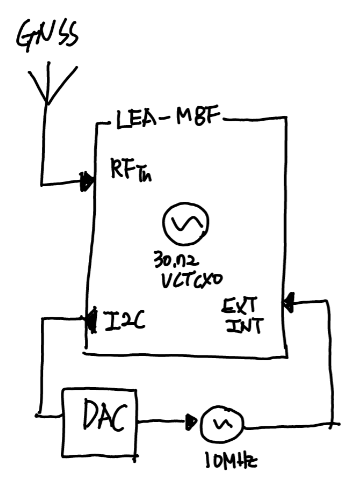
int. osc가 source이고 ext. osc는 Slave이다.
GNSS 신호를 수신하는 상황이라면 GNSS, int. osc, ext. osc 관계는 다음과 같다.
GNSS(source) - int.osc(slave)
int.osc(source) - ext. osc(slave)
ext.osc는 int. osc 에 동기를 맞추고
int. osc는 GNSS 신호에 동기를 맞추고 있기 때문에, ext. osc 또한 GNSS에 동기를 맞추는 것이다.
따라서 VCTCXO(int. osc), 10MHz(ext. osc)는 GNSS에 동기를 맞춘 상태가 된다.
LEA-M8F는 ext. osc의 전압을 제어하여 ext. osc의 출력주파수를 변경하여, ext. osc의 동기를 int. osc에 맞춘다. 이 때 언급되는 용어가 gain vco이다. LEA-M8F는 ext. osc의 전압을 얼만큼 변경하면, ext. osc의 출력주파수가 얼만큼 변경되는지를 알아야 한다. 이 특성을 나타내는 용어가 gain vco이다. ublox는 calibration 과정을 통해 ext. osc의 gainvco 값을 측정하는 기능을 제공한다. u-blox의 TIM-VCOCAL 레지스터를 제어하여 calibration 기능을 시작할 수 있다.
※ ext. osc를 위와 같은 형태로 사용하기 위해서는 EXT_INT0 pin을 ext feed back으로 설정해야한다. 이를 위해 LEA-M8F 의 DOSC(Disciplined oscillator), ESRC(External Source Configuration) 레지스터를 아래와 같이 변경해야 한다.
DOSC는 disciplined osc의 특성을 적는 곳이다.
Disciplined osc의 기본 주파수, 온도/시간 변화에 따른 변화 특성, gain vco(전압 변화에 따른 주파수 변화정도), feed back에 사용할 DAC 를 설정한다.
ESRC는 LEA-M8F의 EXTINT pin을 어떤 용도로 사용할지 설정하는 곳이다.
두번째 구성은 ext. osc가 disciplined osc이며, ext. osc의 출력이 EXTINT 핀에 연결되어있다. EXTINT pin을 feedbac ext osc로 선택하며, ext. osc의 기본 주파수를 적는다.
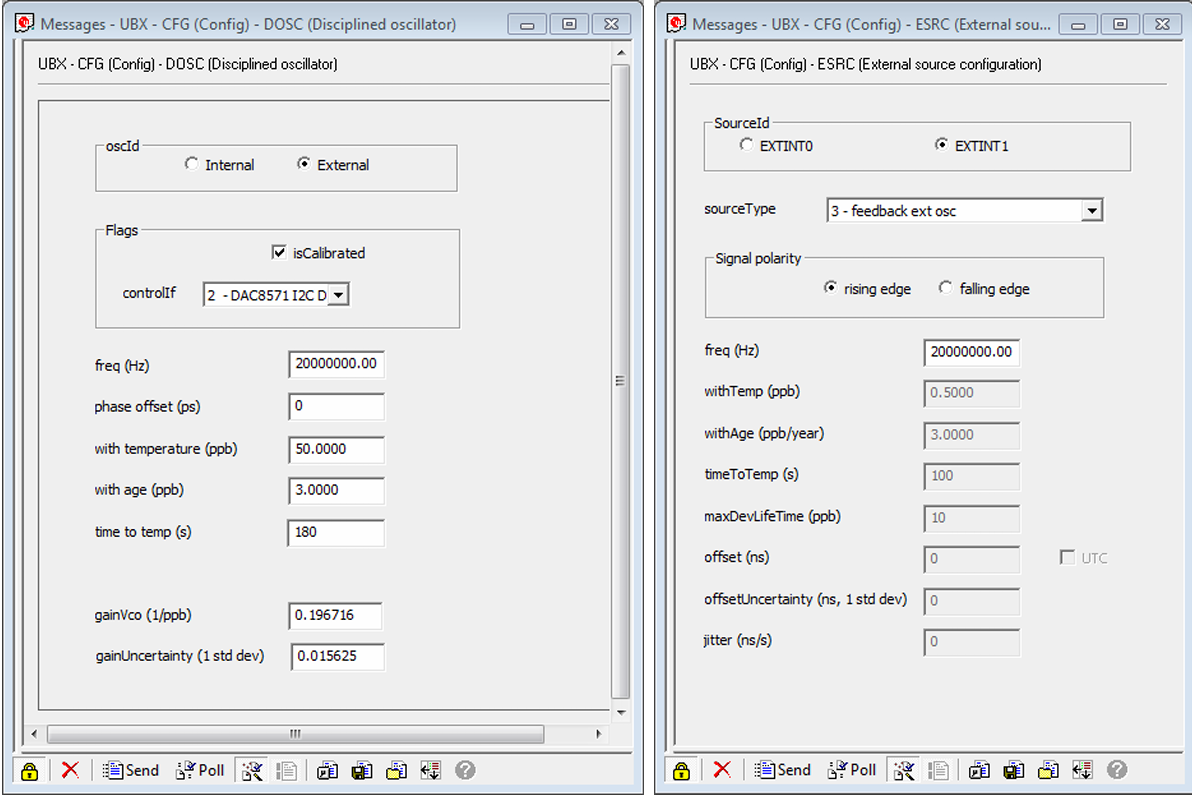
• Nominal frequency: 외부 OSC의 출력 주파수
• Phase offset [ps] – Intended phase offset of the oscillator relative to the leading edge of the time pulse
• withTemp [ppb] - Oscillator stability limit over operating temperature range
• with age[ppb/year] – 1년이 지났을 때 기준주파수 기준으로 얼만큼 벗어나는가 ? / Oscillator stability with age
• Time to operating temperature[sec] – The minimum time that it could take for a temperature variation to move the oscillator frequency by 'withTemp'/ 온도 변화에 따라 osc의 주파수가 변경되는데 걸리는 시
• Oscillator control gain[ppb/lsb] – 1LSB 변경 시 주파수 변동 값, Oscillator control gain/slope, change of frequency per unit change in raw control change
• Oscillator gain uncertainty, 1 sigma - Relative uncertainty (1 standard deviation) of oscillator control gain/slope
3.
int. osc 동기를 GNSS 또는 ext. osc에 맞출 수 있는 구성도이다. 두번째 구성도와 다른 점은 ext. osc가 disciplined osc가 아니라 disciplining osc라는 점이다. GNSS 신호가 없는 상황에서 int.osc는 외부 osc에 동기를 맞춘다.
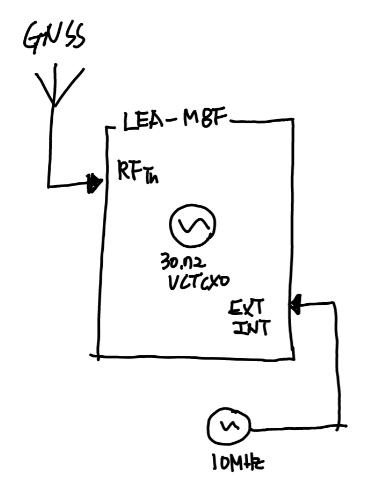
※ ext. osc가 disciplining source로 사용되기 때문에, EXT INT 핀의 Type을 frequency source로 설정하며, ext. osc의 기본 주파수, 온도/시간 변화에 따른 특성을 적는다.
참고로 EXT INT 핀을 time source로 설정할 수 있다. 외부 신호의 주파수에 맞추는 것이 아니라 시각에 맞추겠다는 것이다. 외부의 1PPS 신호를 EXT INT 핀으로 받는 다면 내부 1PPS 신호의 시각동기를 외부 1PPS와 맞출 수 있다.

※ GNSS 신호, ext. osc 가 모두 연결된 상황이라면, 주파수 특성이 더 좋은 source에 int. osc동기를 맞춘다. 다음 내용은 LEA-M8F application note 중 Sync Manager 부분의 내용을 발췌한 것이다.
The SMGR(Sync Manager) evaluates each source of frequency or phase to select the best one for control given their characteristics (phase noise and stability) and uncertainty of their measurements. These can be the GNSS receiver solution or external sources of phase or frequency. Depending on the choice of disciplined oscillator, corrections will be made to the internal VCTCXO and/or externally via a dedicated DDC(I2C) interface which controls a DAC for setting an external oscillator control voltage.
'RF' 카테고리의 다른 글
| Ublox calibration, soure measurements (0) | 2025.05.30 |
|---|---|
| Ublox SMGR(Sync Manger)란 ? (0) | 2025.05.28 |
| 왜 RF 시스템의 임피던스는 50옴 또는 75옴인가 ? (0) | 2024.08.18 |
| 75옴 케이블을 50옴 커넥터에 연결하면 손실은 어떠한가? (0) | 2024.08.17 |
| TV cable의 종류, loss, 가격 (0) | 2024.08.14 |